
Solar Proposal Design for Faster Approvals
A solar sales proposal is a document or presentation prepared by a solar company or sales consultant that outlines a customized solar energy solution for a prospective customer — either residential or commercial. Its main goal is to persuade the customer to purchase and install a solar power system by demonstrating the benefits, savings, and feasibility of going solar.
Purpose of a Solar Sales Proposal:
To clearly show how a solar system will:
- Reduce the customer’s electricity bills
- Provide long-term savings and return on investment
- Qualify for tax credits or local incentives
- Improve energy independence
- Benefit the environment
- Fit their specific home or business setup
What’s Included in a Solar Sales Proposal?
- Customer Overview
- Name, property address, and utility provider
- Summary of their current energy usage
- Site Analysis
- Roof layout, shading, and sun exposure
- Satellite or drone imagery of the property
- Feasibility of installing panels (space, orientation)
- Proposed Solar System
- System size (kW)
- Number and type of solar panels and inverters
- Estimated annual electricity production (kWh)
- Equipment brands (e.g., REC, Q Cells, Enphase)
- Financial Analysis
- Total system cost before and after incentives
- Federal tax credit (ITC – 30%)
- State/local rebates or net metering
- Payback period
- Estimated lifetime savings (usually 25+ years)
- Cash vs. loan vs. lease options
- Environmental Impact
- CO₂ offset (tons per year)
- Equivalent trees planted or miles not driven
- Installation Timeline
- Step-by-step process from signing to activation
- Expected project duration (usually 4–8 weeks)
- Warranties and Support
- Product warranty (typically 25 years for panels)
- Workmanship warranty
- Monitoring tools (app or web portal access)
- Call to Action
- Summary of benefits
- Clear next steps (sign agreement, site survey, etc.)
- Contact info for follow-up
Why Is It Important?
A well-crafted solar sales proposal:
- Builds trust and professionalism
- Helps customers understand the technical and financial aspects
- Overcomes objections with clear data
- Speeds up decision-making
- Increases your closing rate
Project Details and System Design
- Site-Specific Analysis: Include details from your site survey and engineering analysis. This adds credibility and shows you’ve done your homework. Mention the roof condition, sun exposure, and any shading issues.
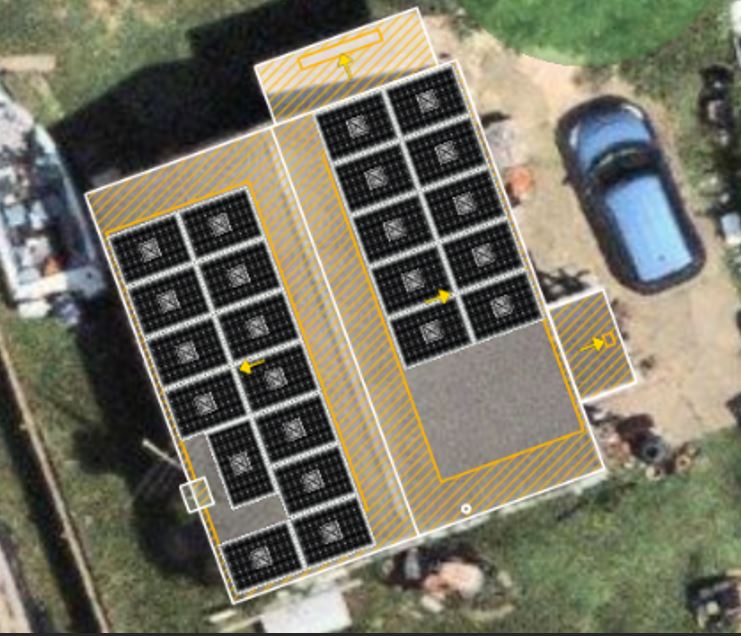
- System Design and Layout: Provide a visual representation of the proposed system. This could be a 3D rendering or a detailed diagram showing where the solar panels will be installed on the roof or property.
- Product Specifications: Detail the specific components you’ll be using, including the brand and model of the solar panels, inverters, and mounting systems. Explain why you chose these products, emphasizing their quality, efficiency, and warranties.
- Energy Production Estimates: Clearly state the projected energy output of the system in kWh. Show a year-by-year breakdown of how much energy the system is expected to generate.
Financial Analysis and Return on
Investment (ROI)
- Cost Breakdown: Be transparent with your pricing. Provide a detailed, itemized list of all costs, including materials, labor, permits, and any other fees. Avoid “sticker shock” by showing exactly what the investment covers.
- Energy Bill Savings: This is often the most important section for the customer. Use their current energy bill as a baseline and show a clear “before-and-after” comparison. Use graphs and charts to visually represent the monthly and annual savings.
- Lifetime Savings Projection: Extend the savings analysis over the entire lifetime of the system (20-25 years). This demonstrates the long-term financial value of going solar.
- Financial Incentives: Clearly outline all available federal, state, and local tax credits, rebates, and other incentives that will reduce the upfront cost. Explain how these work and what the client needs to do to claim them.
- Financing Options: Present the different ways the client can pay for the system, such as a cash purchase, loan options, or a lease/PPA (Power Purchase Agreement). Include specific details for each option.
- Payback Period and ROI: State the estimated payback period—the time it will take for the system to pay for itself through energy savings. Also, include the projected return on investment.
FAQ
1.What is a solar sales proposal?
A solar sales proposal is a detailed document that explains a solar system’s design, estimated energy production, savings, and return on investment. It helps solar companies clearly present benefits to customers and close deals faster.
2.Who needs a solar sales proposal?
Solar installers, EPC companies, and solar sales teams need solar sales proposals to present accurate system details, pricing benefits, and savings estimates to residential and commercial customers.
3.What does a solar sales proposal include?
A solar sales proposal includes system layout, panel placement, system size, estimated energy production, savings analysis, ROI, payback period, and equipment specifications customized for the customer’s site.
4.Are solar sales proposals customizable?
Yes. Solar sales proposals can be fully customized with company branding, including logo, colors, contact details, and preferred equipment, allowing solar businesses to present proposals as their own.
5.How accurate are solar savings estimates in proposals?
Solar savings estimates are calculated using industry-standard tools, site data, and utility information to provide realistic and reliable projections that build customer trust.
6.How long does it take to create a solar sales proposal?
A professional solar sales proposal is typically delivered depending on project complexity and data availability.
7.Can solar sales proposals be used for commercial projects?
Yes. Solar sales proposals can be created for both residential and commercial solar projects, including rooftop and ground-mounted systems.
8.Do solar sales proposals help close more deals?
Yes. Clear visuals, simple financial breakdowns, and transparent savings information make it easier for customers to understand benefits and make faster decisions.
9.What information is required to create a solar sales proposal?
To create a solar sales proposal, basic details such as site address, roof or site images, utility bill (if available), and customer energy requirements are needed.
10.How do I get a solar sales proposal from Southvine Energy?
You can get a solar sales proposal by submitting your project details through the contact form or emailing info@southvineen.com for quick processing.